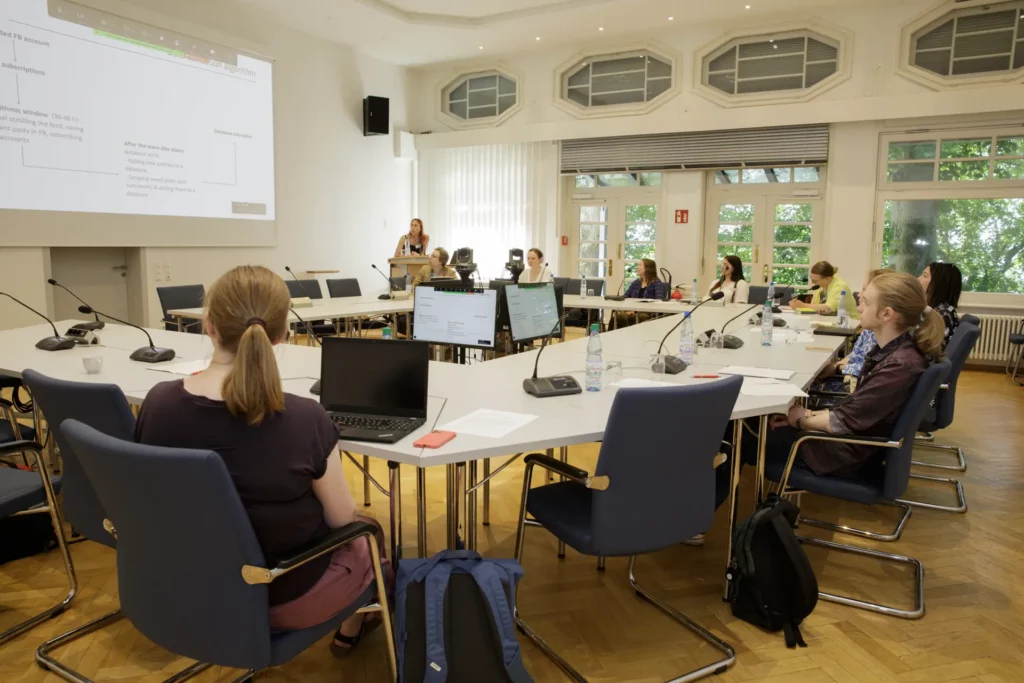
On June 24, 2026, the Herder Institute hosted the LivArch Workshop Digitalities of Russia’s War against Ukraine, bringing together Ukrainian research fellows and guests to explore how digital technologies shape the documentation, preservation, and interpretation of the ongoing war in Ukraine. More than a conventional academic workshop, the event became a space for collaborative thinking, interdisciplinary exchange, and the collective development of research on one of the most pressing historical and societal challenges of our time.
The workshop formed part of the LivArch project (Documenting Russia’s War against Ukraine: The Challenges of Living Archives for Historical Knowledge Production), which investigates how digitally born and community-driven archives transform historical research while raising new methodological and ethical questions. Living archives — created through social media, citizen initiatives, digital heritage projects, wartime diaries, satellite imagery, and countless other forms of documentation — require historians and digital humanists to rethink how knowledge is produced, curated, and preserved in times of conflict.
Exploring the Digitalities of Russia’s War against Ukraine
The workshop showed a variety of “living archives” — dynamic forms of documentation that emerge during ongoing war in Ukraine and that are shaped by digital technologies, civic engagement, and changing memory practices — from endangered cultural heritage and personal diaries to internet humour, social media narratives, and computational data collection.
Starting off with how those living archives contribute to cultural memory and shape it, Ilami Yasna (Polish Academy of Sciences, Warsaw) focused on the phenomenon when crisis and extreme conditions trigger life writing in the form of diaries, memoirs, personal blogs, correspondence, etcetera. Ukraine is a striking example of this: since the full-scale invasion in February 2022, thousands of people began to write. The first Facebook and Telegram posts began to appear in the first minutes after the first explosions sounded and they were informed that war had begun. People wrote while hiding from attacks in bomb shelters, basements, bathrooms, and corridors. They described sounds they heard, fire they saw, fear they felt – and always strong motivation to survive and not give up. Soon, this life-writing wave swept through thousands of people, who often assessed daily public writing as a way to keep their minds and souls intact, to cope with stress, and even as a mission to document their lives for readers today and in the future. In the first year of the full-scale war, many online diaries grew into published books with English translations. However, by late 2023, the surge in print publications began to subside, and most of the authors remained active on the social networks and were even joined by new authors.
With this said, this rich body of texts remained scattered across platforms, regions, and topics and, crucially, was only occasionally discoverable due to social network algorithms. This problem became especially visible on Facebook, which has yielded the richest material and yet remained the least predictable due to its feed-generation algorithms. This situation motivated Ilami to create a curated living longitudinal relational cross-media corpus of wartime diaries. The first release of this Corpus is available by the link https://thestayer.org/corpus, and remains intensively updated.
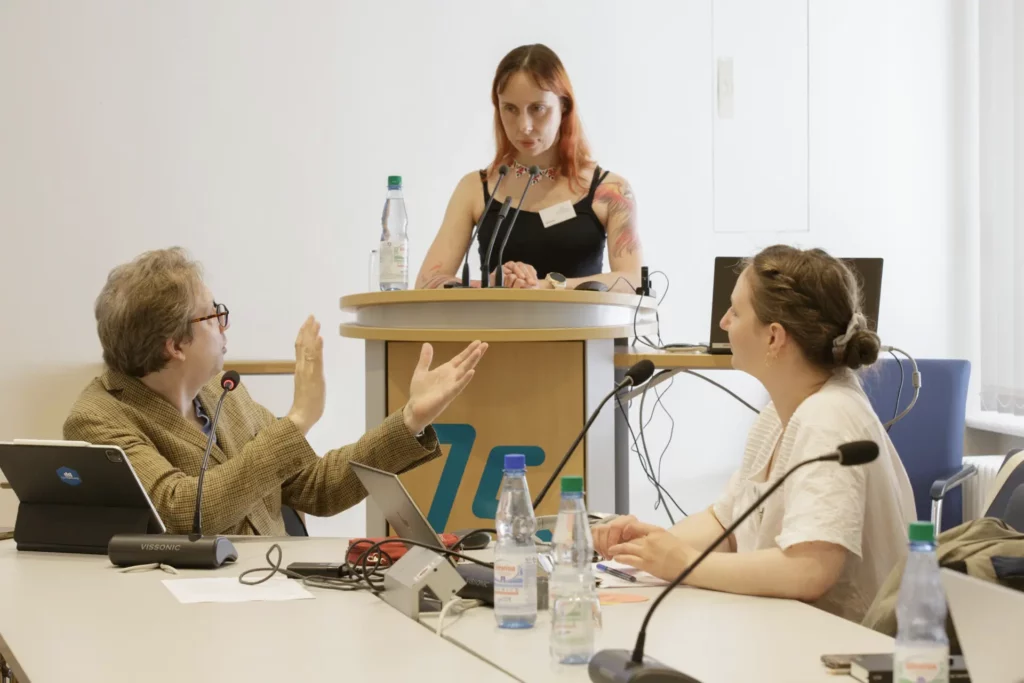
Nadiia Bedrina (Kharkiv State Academy of Design and Arts & State Academy of Culture, Kharkiv) stated about her stay in Marburg: “When studying wartime heritage, one expects theoretical challenges, but our journey from Edinburgh to Marburg became a literal masterclass in infrastructure collapse. Between UK train cancellations, airport delays, and a railway blackout in Germany that forced a midnight taxi dash, the trip became an unexpected test of the very “resilience” we were gathering to discuss. Yet, this logistical chaos perfectly set the stage for my presentation, “Living archives of resilience: a multidisciplinary framework for documenting war-torn Ukrainian heritage through academic and civic engagement.” It underscored the exact challenges my research addresses: how to systematically preserve fragmented data gathered under extreme crisis. Navigating this personal transport crisis ironically sharpened the focus of our discussions. Whether analyzing public wartime diaries or digital humor born from wartime power outages, my peers and I realized we are all trying to archive living history when systems are breaking.”
The afternoon session of the workshop shifted from documentation practices to the ways in which digital media actively shape wartime experiences and public participation.
Olena Shevchenko (Archaeological Museum, Odesa & King’s College London) examined Ukrainian Humour about Power Outages in Wartime (2025–2026). Her project started last winter, as she watched Ukrainians cope with the constant power outages caused by Russian attacks. She was struck by the enormous amount of humorous content that appeared on social media. Memes and short videos about blackouts were everywhere. As a historian, she immediately felt that these posts were much more than entertainment — they were unique historical sources documenting everyday life during the war.
Without any concrete research plans at the time, she simply began saving everything she came across. Over the following months, she collected nearly one hundred memes and Instagram reels documenting the blackout period of the winter of 2025–2026 in Ukraine.
Recognising the value of preserving these materials, she made the collection openly available through the Internet Archive: https://archive.org/details/@olena_shevchenko754, where it can be freely explored and reused for research purposes.
She is currently writing an article based on this collection, reconstructing the everyday experiences of ordinary Ukrainians during the blackout winter of 2025–2026, and she plans to submit it to an international academic journal.
Veronika Barankevych (University of Economics, Kraków) presented Digital Architecture of Resistance: A Multi-Level Evolution of Gamification, Military Branding, and Social Media Narratives in Ukraine’s Drone Warfare (2025–2026). Her research explored how eBonus System used by the Ukrainian military fosters archive gamification. She identified the challenges of the system and outlined the methodological framework for digital wartime archives.
The presentation by Jakob Krüger and Johannes-Andreas Becker (University of Marburg) offered a methodological perspective on how to collect data from Telegram and make it available for research. The tool that they built will have different features for easier research.
Rather than treating digital material simply as historical evidence, the workshop highlighted how digital environments actively shape the production, circulation, and preservation of historical knowledge during the ongoing war.
A Research Studio As a Space for Idea Production
The second half of the workshop continued the collaboration that had developed throughout the fellowships. Participants had the opportunity to share their current research interests and challenges and to explore possible solutions through collaboration and exchange. It became clear that the diversity of topics and research focuses presented both a challenge and an opportunity.
One issue that emerged in relation to wartime documentation was the question of retraumatisation and responsible access to sources. Participants agreed that this topic required further discussion. The session not only raised awareness of these challenges but also provided a basis for developing research standards for the individual projects. Emergency documentation inevitably requires the rapid collection of materials, while the standardisation of formats may need to follow at a later stage.
A second in-depth discussion focused on developing a tool to support researchers in collecting sources for “living archives”. The diversity of these sources could be addressed through AI-supported tools or a website that helps initiatives at different stages of the collection process to make their archives visible and sustainable and to work with metadata standards tailored to their specific needs. The discussion around this tool will continue, and updates will be shared on the LivArch website.
More Than Academic Exchange
The workshop was embedded within the broader LivArch Fellowship Programme, which hosted four researchers working on different aspects of documenting Russia’s War against Ukraine during their partially remote research stay at the Herder Institute.
Voices from our Fellows
Nadiia Bedrina: The LivArch Fellowship provided the ideal collaborative space to turn theoretical challenges of my project into functional solutions. It empowered me to refine and present my “Four-Facet System”, a methodology designed to structure and normalize chaotic grassroots evidence without stripping away its vital wartime context.
But beyond the academic framework, LivArch redefined what true institutional support looks like. This was actually the very first grant I have ever won, and the level of care was unprecedented. My 9-year-old son was with me in the workshop, and the programme generously supported his presence by covering our logistical and childcare needs. By providing this holistic care (right down to a dedicated playroom for him), LivArch proved that to build a “living archive”, you must first sustain the researchers and families behind it. I leave Marburg with a functional methodological framework, invaluable new colleagues, and immense gratitude.
Ilami Yasna: As a sociologist, I had little idea of creating digital archives – only a strong motivation to realise my project. And this would have never become possible without the generous support of the LivArch team, who supported us Ukrainian fellows every step of this path. Biweekly online jour-fixes, individual consultations with experts, three fantastic days in the Herder Institute in Marburg – with all these, I found myself in a creative environment I have never been in previously. Crucially, this collaboration has not finished with the end of my fellowship. Our LivArch Alumni community is evolving, and I truly believe that with this fellowship I have gained something more valuable than a project realization – real soulmates in Ukraine and abroad.
Olena Shevchenko: Receiving the news that I had been selected as one of the fellows was a wonderful surprise.
From that moment, my collection stopped being just a folder of saved materials. During the fellowship, together with researchers at the Herder Institute, I began thinking about how such born-digital sources can be preserved, documented, and made accessible for future research. We discussed metadata, long-term preservation, ethical questions, and possible future directions for the project.
One of the highlights of the programme was travelling to Marburg and meeting the LivArch team and the other fellows in person. As an archaeologist, it was fascinating to step into a different academic community and exchange ideas with scholars working on digital history, cultural heritage, and living archives. Presenting my project and discussing it face to face reminded me that, even in the digital age, personal conversations remain one of the most valuable resources for developing new research.
I am sincerely grateful to the organisers of the LivArch Fellowship, the Herder Institute, and my fellow researchers for opening new opportunities and helping transform a spontaneous idea into a research project with an international future.
Veronika Barankevych: Even while participating remotely, the LivArch Fellowship provided an invaluable collaborative space and a strong sense of intellectual community. Researching the gamification and digital architecture of Ukraine’s drone warfare means grappling with fleeting, algorithm-driven sources that exist at the intersection of military branding and digital memory.
The regular jour-fixes, insightful consultations, and thoughtful discussions with the LivArch team and fellow researchers gave my project critical methodological grounding and long-term momentum. Despite the distance, this exchange truly bridged technical analysis with sustainable archiving standards. I am deeply grateful to the Herder Institute and the LivArch initiative for their continuous support, meaningful connections, and dedication to empowering Ukrainian scholars during such a critical time.
Looking Ahead
Creating networks
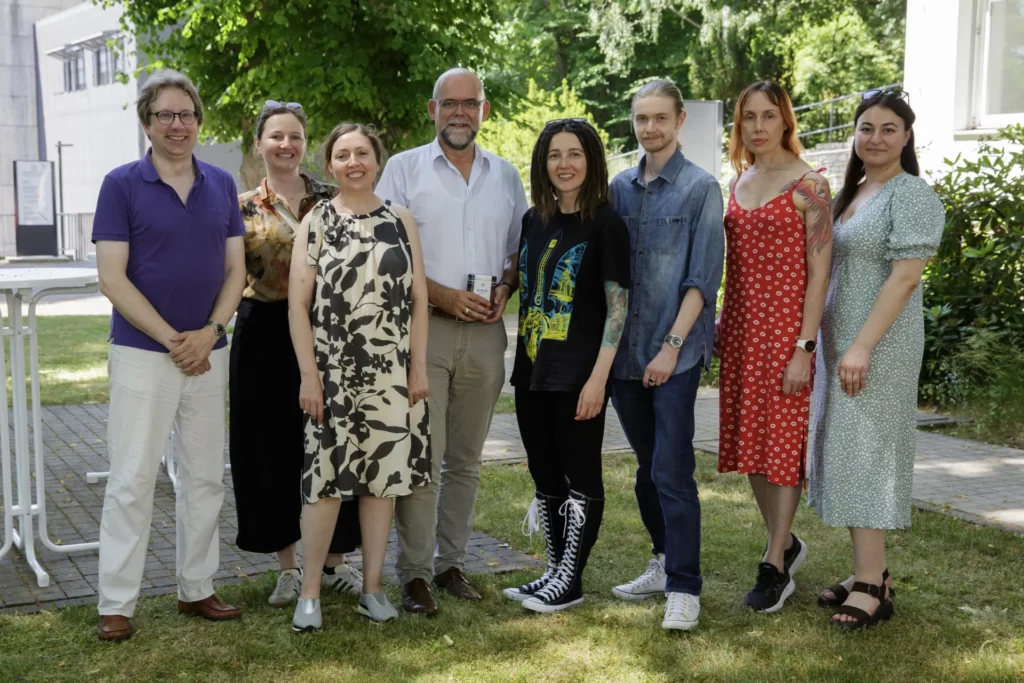
The LivArch Fellowships will host another cohort of fellows in Autumn. With the establishment of strong network connections during the Spring cohort, the fellowships aim to work towards a long-term network for initiatives documenting Russia’s War against Ukraine. The exchange among researchers proved as one of the most valuable tools to explore beyond the limits of cutting edge research questions with sources that are continued to be generated online.
Links to publications
- Ukrainian Humour about Power Outages in Wartime (2025–2026) collection by Olena Shevchenko is openly available through the Internet Archive: https://archive.org/details/@olena_shevchenko754, where it can be freely explored and reused for research purposes.
- Ilami Yasna: The Stayer: Sociality and Knowledge in Disrupted Worlds is available here: https://thestayer.org/project